Walk on the walls of York ~ York for Europe and friends.
Sunday 6th September 2026
We had three special guests...
Peter Corr, founder and chair of the National Rejoin March
Ben Chambers, of Single Minded Rejoiners and Producer of SMR Rejoin Radio
Mike Galsworthy, Chair of the European Movement UK
The walk started at York Railway Station a little after 2.00 p.m.. Our cohort was rallied by our standard bearer Jonathan. We ascended the walls initially at Micklegate, and proceeded in the direction of back towards the station. The pilgrimage necessitated a number of stone staircases as it is necessary to cover some of the distance at street level. This gave the opportunities for refreshment, examining curiosities and chatting to a few passers-by.
The event terminated in the beer garden of the Black Horse at Monkbar.
links to podcast to follow


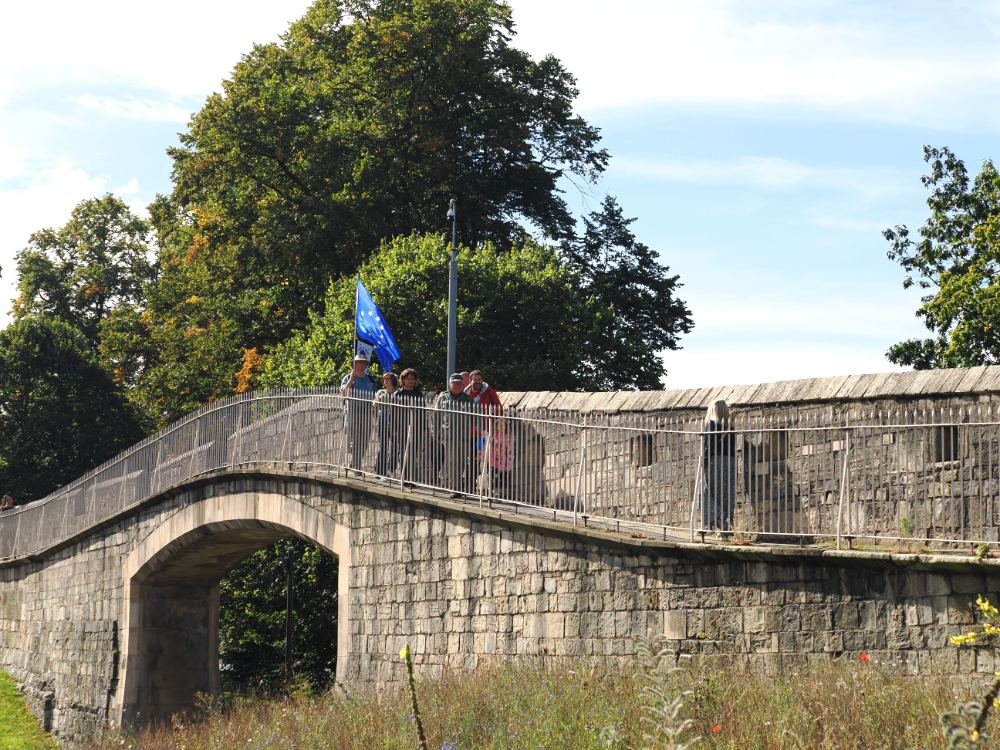
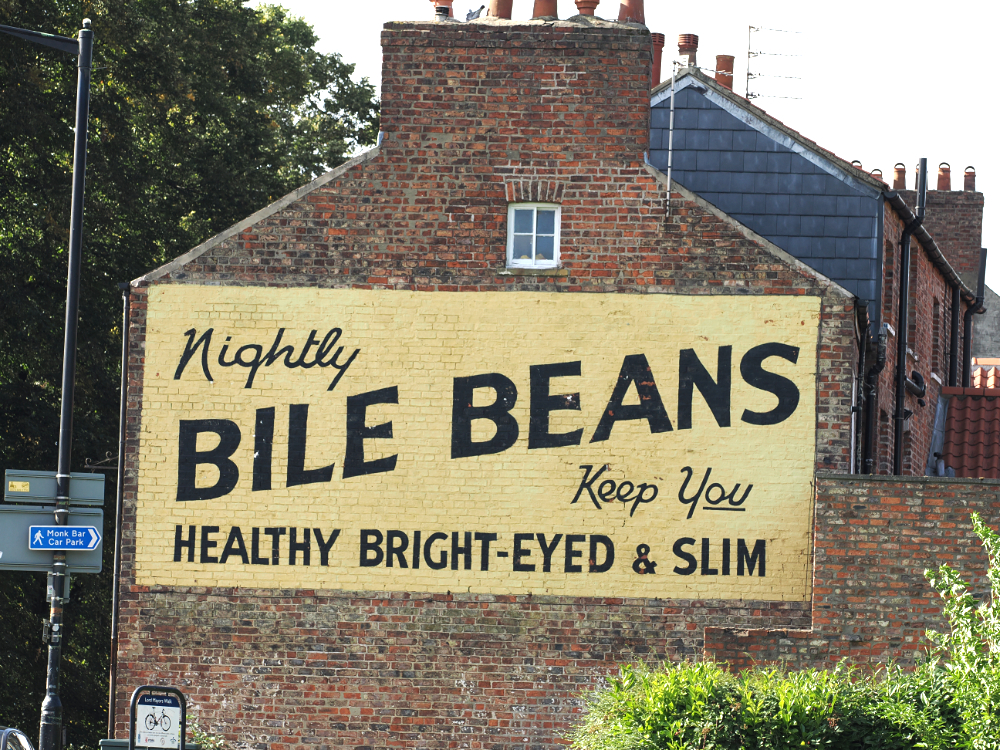
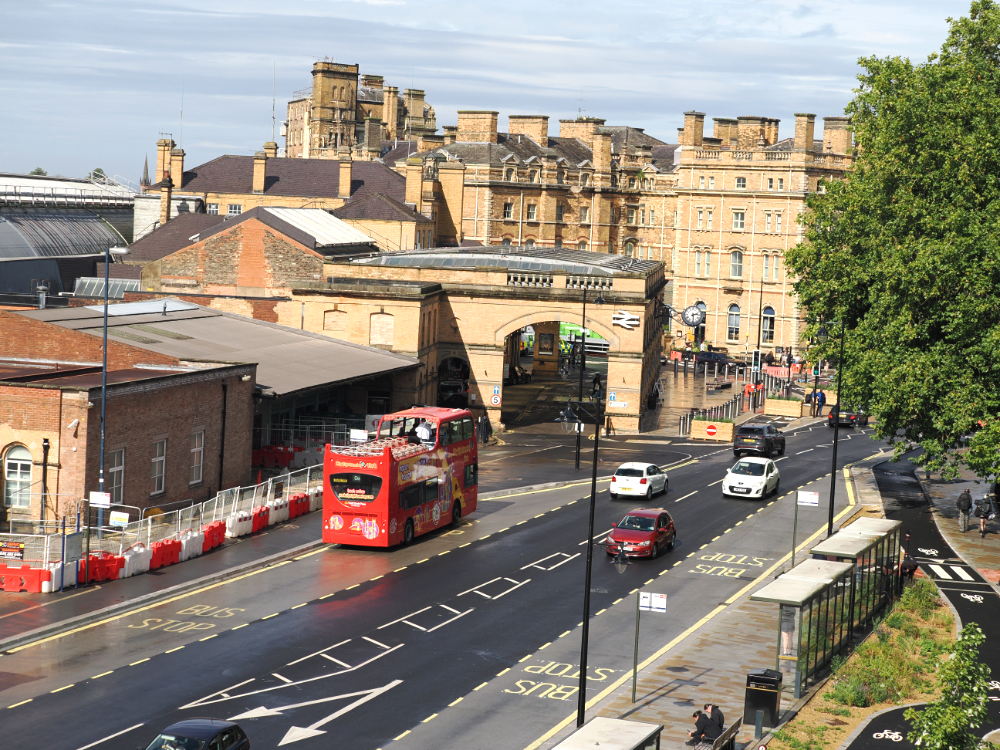


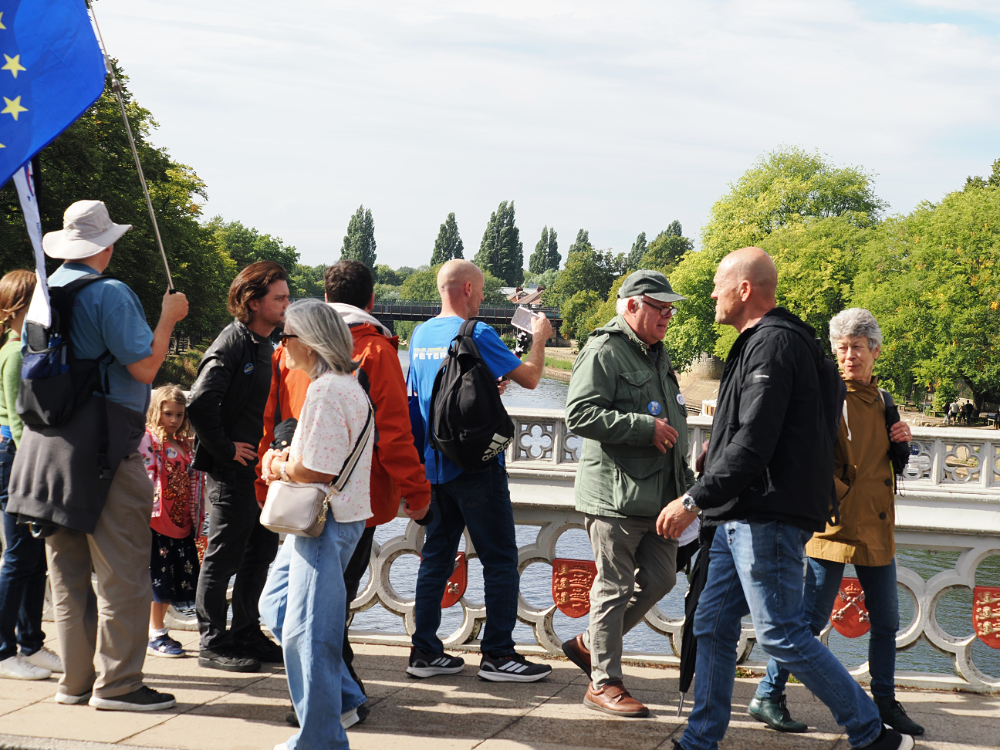




Our thanks to all new and old friends we met on, up, down and near the walls of York. Join us at our next campaign ~ details as ever on our website. here
WALK YORK 26 ~ some brief notes
Railway station
York railway station, opened in June 1877, was the largest in the world at that time and served as a key junction on the East Coast Main Line.
National railway museum Free to visit
Dates from 1975, is immense and holds amazing exhibits such as:
• The Flying Scotsman
• The "Palaces on Wheels", a collection of Royal Train saloons from Queen Victoria's early trains through to those used by Queen Elizabeth II up to the 1970s
• Wagonway vehicles of 1815 – which were carriages drawn by horses.
• Shikansen from Japan – early example
• French wagon-lits and Eurostar (our European connection)
York walls
York’s old City Walls are the most complete in England, though you have to get off and get on again in places. The Romans built the first in AD71 when York was Eboracum. Then the Vikings built theirs, probably earth banks, in the 9th and 10th century when York was Yorvik. The current walls were built mainly in the 13th century on top of the older earth banks. The slopes are covered in daffodils in March and April.
The Bar Convent
This is the oldest living convent in the UK and oldest surviving place of Catholic worship after Henry VIII closed them all down in the 1530s. Founded by Mary Ward, she made education one of her main missions in life. Today the Bar Convent is the mother house of a global order of nuns (IBVM/CJ), and there are 200 schools named after Mary Ward across the world.
Old railway station
LOOK AT THE COUNCIL OFFICES – this was York’s old railway station, built inside the city walls, and used between 1841 and the building of the current railway station in 1877. An arch was made in the city walls to allow railway access to the station.
LOOK AT THE GRAND HOTEL – This Grade II listed building was originally the headquarters of the North Eastern Railway and dates from 1906.
LOOK AT MILNER’S HOTEL next to the station – The first railway hotel (The Royal Station Hotel) was opened in 1841 and Queen Victoria, Prince
Albert and their five children spent half an hour here on 13 September 1854 on their way to Scotland.
Subsequently, a second railway hotel (also called The Royal Station Hotel) was built between 1866 and 1877. It was officially opened on 20 May 1878. It was rebranded as The Milner Hotel in October 2024 and named after William Milner, a courageous World War II York Station foreman.
The current Minster was constructed between 1220 and 1472, although the history goes back to the 7th century. It has a magnificent collection of stained glass windows from the medieval times.
By the side of the Minster is St Michael le Belfry church where Guy Fawkes was baptised in 1570. He attended St Peter’s School in York, which still exists as a public, fee-paying school.
WALK OFF THE WALLS AND OVER THE RIVER OUSE.
Judy Dench Walk – is the name of the walk along the river away from the city centre. Judy Dench was born in York in 1934, attended school here and start her acting career here, notably in the York Mystery Plays from 1951; she played the Virgin Mary in 1957.
The gates of Museum Gardens
The gardens hold the remains of St Mary’s Abbey, a victim of Henry VIII’s reformation. There is also the Yorkshire Museum with Roman, Viking and Anglo-Saxon exhibits as well as prehistory.
The most visible remains of the Roman wall in York is the Multangular Tower in the Museum Gardens, built around 310–320 AD and standing nearly 30 feet tall.
The Yorkshire Philosophical Society, meaning “scientific” nowadays, formed in 1822 has its office on the left of the gate. It arranges a wide variety of talks and visits. It built the Yorkshire Museum and an astronomical observatory in 1832 in the gardens.
GO INTO THE GARDENS AND TURN RIGHT TO EXIT ALONGSIDE KINGS MANOR. STOP IN FRONT OF THE ART GALLERY
King’s Manor
This was the house of the abbot of St Mary’s Abbey until 1539 when the abbey was dissolved under Henry VIII. It was named King’s Manor in 1541 when it was refurbished ahead of a visit from Henry VIII and Queen Catherine, Catherine Howard. From 1539 to 1641, this building was the headquarters of the Council of the North. King Charles I stayed here during his visits to York in 1633 and 1639.
Since 1963, King’s Manor has been leased to the University of York. From this month onwards it is being leased to York’s other university: York St John’s.
Art Gallery
Built in 1879, but lost half its size by bomb damage in World War II. A notable curator was Hans Hess. He was Jewish and had to flee to the UK from Germany in the 1930s. During the war he was interned as an enemy alien on the Isle of Man and in Canada. He was curator at York 1947-1967.
CLIMB THE STEPS INTO BOOTHAM BAR
Bootham bar
The York walls have 4 main gateway entrances, called “bars”. It was named after the right of St Mary’s Abbey to have weekly markets there – with their “booths”. It sits next to the site of a Roman entrance into the city.
WALK ALONG THE WALLS TOWARDS MONKBAR
View of Minster and gardens: NOTE THE MODERN BULDINGS IN WHAT WAS THE DEAN’S VEGETABLE GARDEN.
York Minster is establishing a Centre of Excellence for Heritage Craft Skills to train craftspeople in traditional skills such as stonemasonry and stained glass, to preserve ancient craft techniques for future generations. Apprentices come from all over Europe and the Centre has accommodation for them.
York St John’s University – York has two universities. This is York St John built in 1841 originally as teacher training colleges for men and women. In 2006, it was given the status of a university. The then archbishop of York, John Sentamu, was its first chancellor. The current chancellor is the broadcaster Reeta Chakrabati.
The other university, called, of course!, the University of York, was established in 1963 on the outskirts of the city. Not to be confused with York University which is in Toronto, Canada.
Monkbar
It is the only bar with a working portcullis, last used in 1970. It is built on the site of a former Roman entrance into the city. It is called Monkbar after the street it leads into, Monkgate, named after the monks of the Minster.
Below Monkbar is the Monkbar model shop, founded in 1963, and a delight for all train, car, plane model fans.
GO DOWN ONTO MONKGATE ~ nearby Black Horse pub - where we had a pint and a snack....